

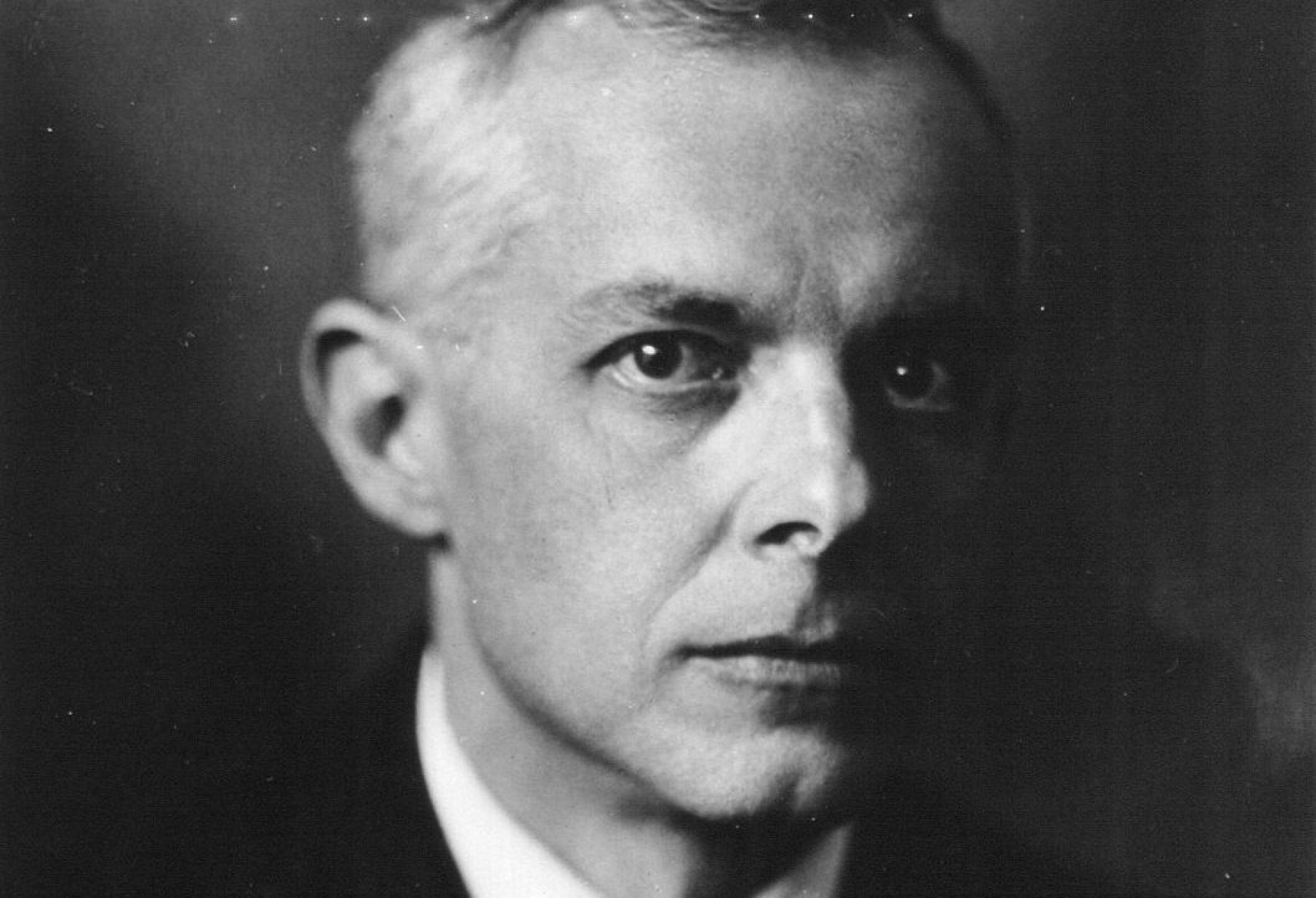
There can be no doubt Bartók has the power to inspire others: for generations, he has been an inexhaustible source of motivation across continents and genres. But where did he draw his own inspiration from?
As one of the most important composers of the 20th century, he is still regarded as a paragon not only in his birthplace, Hungary, but thousands of kilometres away as well. Many internationally renowned members of China’s new generation of composers look upon Bartók as a major inspiration; his oeuvre is taught at two of the country’s largest music institutions, the Beijing and Shanghai Conservatories, and collecting folk music has become a compulsory part of the curriculum at the Beijing Central Conservatory. Oscar-winning composer Tan Dun, whose concert closed our festival last year, was inspired by Bartók’s work to research the traditional music of his native Hunan province and record on video the performances of village musicians and singers, collecting material that was later incorporated into his own compositions.
But the performers at this year’s festival are also attached to him in countless ways. Barnabás Kelemen has again and again proved to be a brilliant performer of Bartók’s music. Last year, the programme of his concert with Söndörgő included String Quartet No. 5, of which he said in an interview: ‘Throughout his life, Bartók maintained close relationships with violinists, and we who play the instrument are lucky because he wrote a great many fine pieces for it. He composed very carefully, and he was probably able to wait for the appropriate inspiration from heaven, which gave each of his works an element of wonder, something inexplicable, a deep meaning.’ Júlia Pusker also likes to programme the composer’s pieces, and will play Violin Concerto No. 1 with the Kammerorchester Basel. ‘People still think Béla Bartók's pieces are difficult, but I believe they can be understood. His music speaks to the heart, and is intelligible, not to be feared,’ said the violinist, who lives in Berlin.
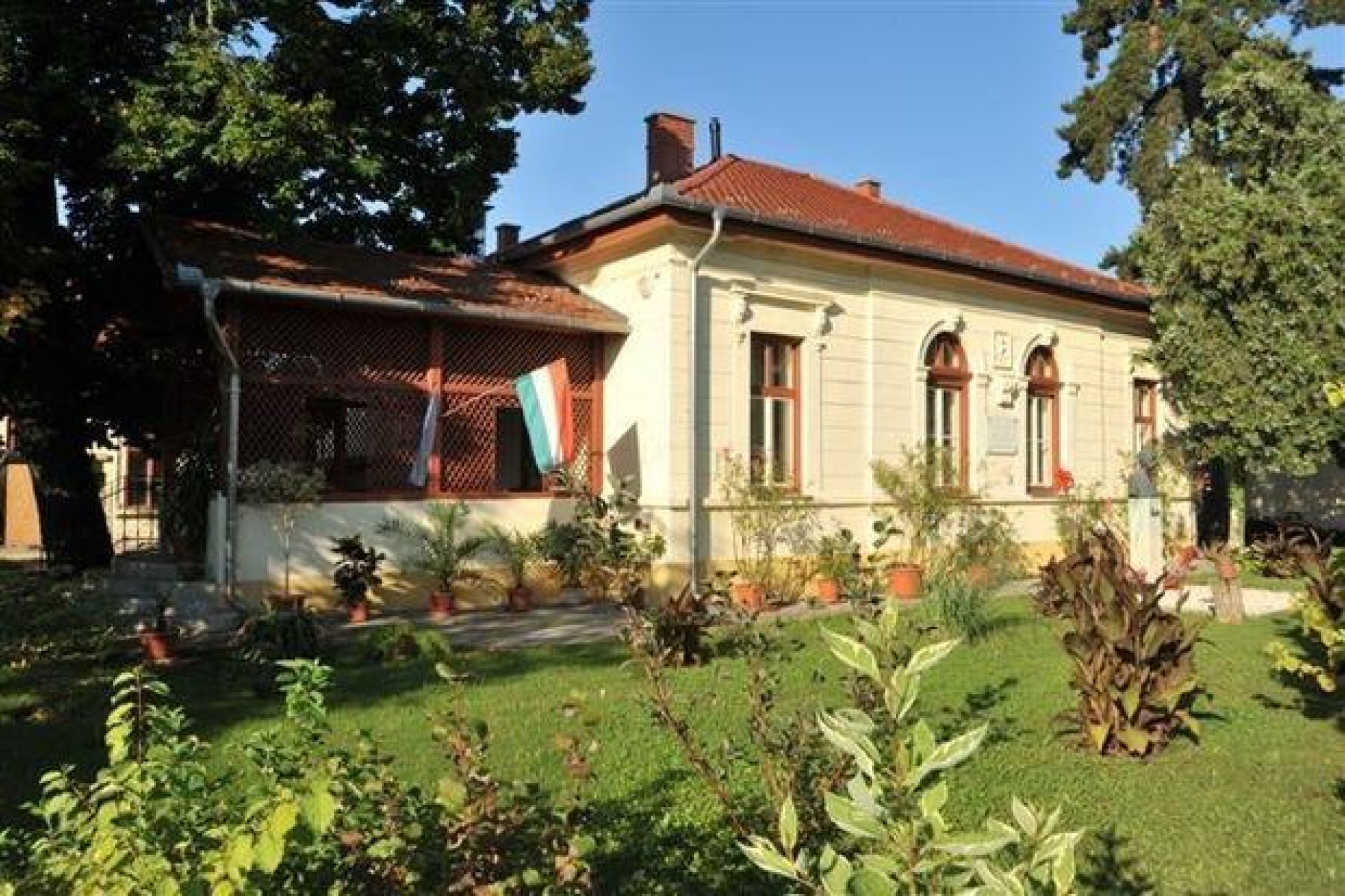
His former home on Teréz Street is now houses the Bartók Music House of Rákoshegy (Source: bartokzenehaz.hu)
So the question may arise: what inspired the artist who created so many inspiring works? The answer may surprise many: it was silence. Bartók lusted after the harmony and peace provided by silence, and repeatedly said that silence was essential for composition. This was often the main criterion when it came to choosing a place of residence. He moved into the first flat he could call his own in 1907; it was on the 4th floor of a tenement house at 17 Teréz Boulevard. Though it was close to his workplace, the Academy of Music, and only a few stops from the Opera House and Pesti Vigadó, it soon became clear that the noisy neighbourhood was not suitable for creative work.
He was already married when in 1911 they moved to Rákoshegy, which was still an independent settlement at that time (and is now the 17th District of Budapest). Their home in Jókai Street, however, proved less than ideal for several reasons, and a few months later they moved even further out. ‘Our first flat was quite small and didn’t provide him with the quiet he needed for his work, so we soon moved to another, more suitable home: a four-room house with a summer pavilion in the garden. The plots next to us and behind us were empty, and the silence was completely undisturbed,’ his first wife, Márta Ziegler, wrote in her memoir. ‘Regardless, he would compose mostly at night; during the day, he would note down and organize the folk songs he had recorded on wax cylinders, would read and study languages… He would exercise in the mornings following Müller’s Mein System and took sunbaths whenever he could. The way he could tolerate the sun was astounding. And he would work all the while, study languages, or orchestrate.’ The house at 28 Teréz Street (now 50 Hunyadi Street), where he lived until 1920, proved to be an excellent choice: it was there that he finished Bluebeard’s Castle (lounging naked in the garden, according to some sources), wrote The Wooden Prince and The Miraculous Mandarin, and it was from here that he set off on his folk song collecting trips to Transylvania, Upper Hungary and Moldavia.
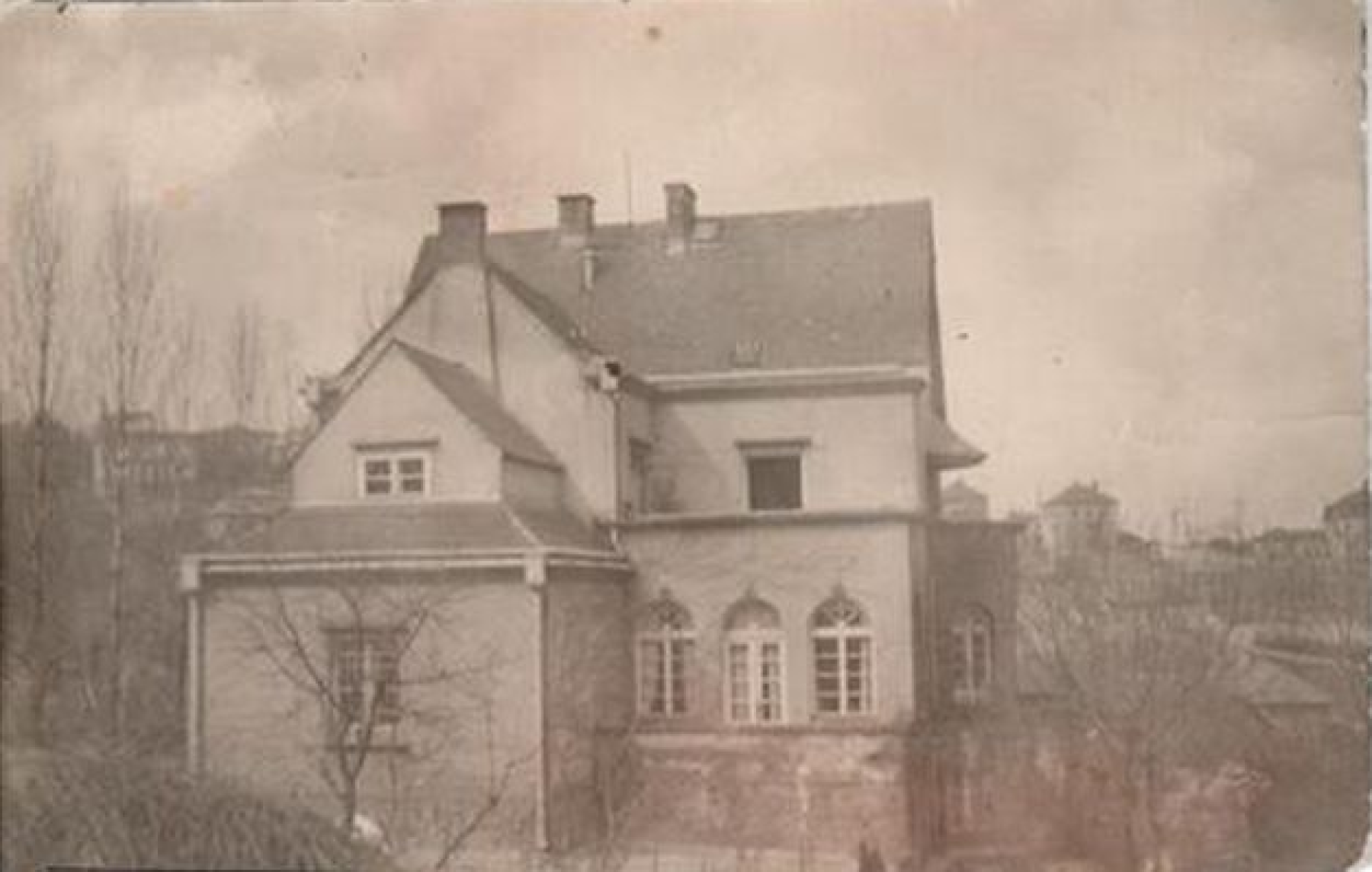
The Bartók Residence at Kavics Street 10 formerly (Photo: Ligeti Géza)
The hardships that marked the period after the First World War (food and firewood were hard to come by, the train service between Budapest and Rákoshegy had become unreliable) forced the Bartóks to move back to the city. Between 1920 and 1922, they lived in the Lukács Villa on Gellért-hegy, and then, in 1922, an unexpected inheritance helped them to move into a flat in the Art Nouveau tenement house on Szilágyi Dezső Square. Although the Förster House had all modern conveniences—two lifts, entryphone, a central vacuum cleaner—the noise of the city almost made it impossible for Bartók to work, and he yearned to return to the suburbs.
In 1932, Bartók and his second wife, Ditta Pásztory, moved out of their flat in Kavics Street (2nd District), where Bartók was distracted by the footsteps of the upstairs tenants, and took up residence in one of the quietest parts of Pasarét,* on Csalán Road, with their eight-year-old son, Péter, and their two employees, Magdolna Kraszt (Lencsi) and her niece, Júlia. Built in 1923, the villa had two storeys and enough rooms to place the several pianos that allowed the couple to practise for their joint concerts both individually and together. By his own account, this was Bartók’s most comfortable and elegant place of residence. During the eight and a half years spent there, he composed such masterpieces as a large portion of the 153 movements of the piano school book, Mikrokosmos, String Quartets No. 5 and No. 6, 27 Choruses for Children’s and Female Voices, Music for Strings, Percussion and Celesta, Sonata for Two Pianos and Percussion, Contrasts and Violin Concerto No. 2, which is considered one of the most difficult pieces in the form.
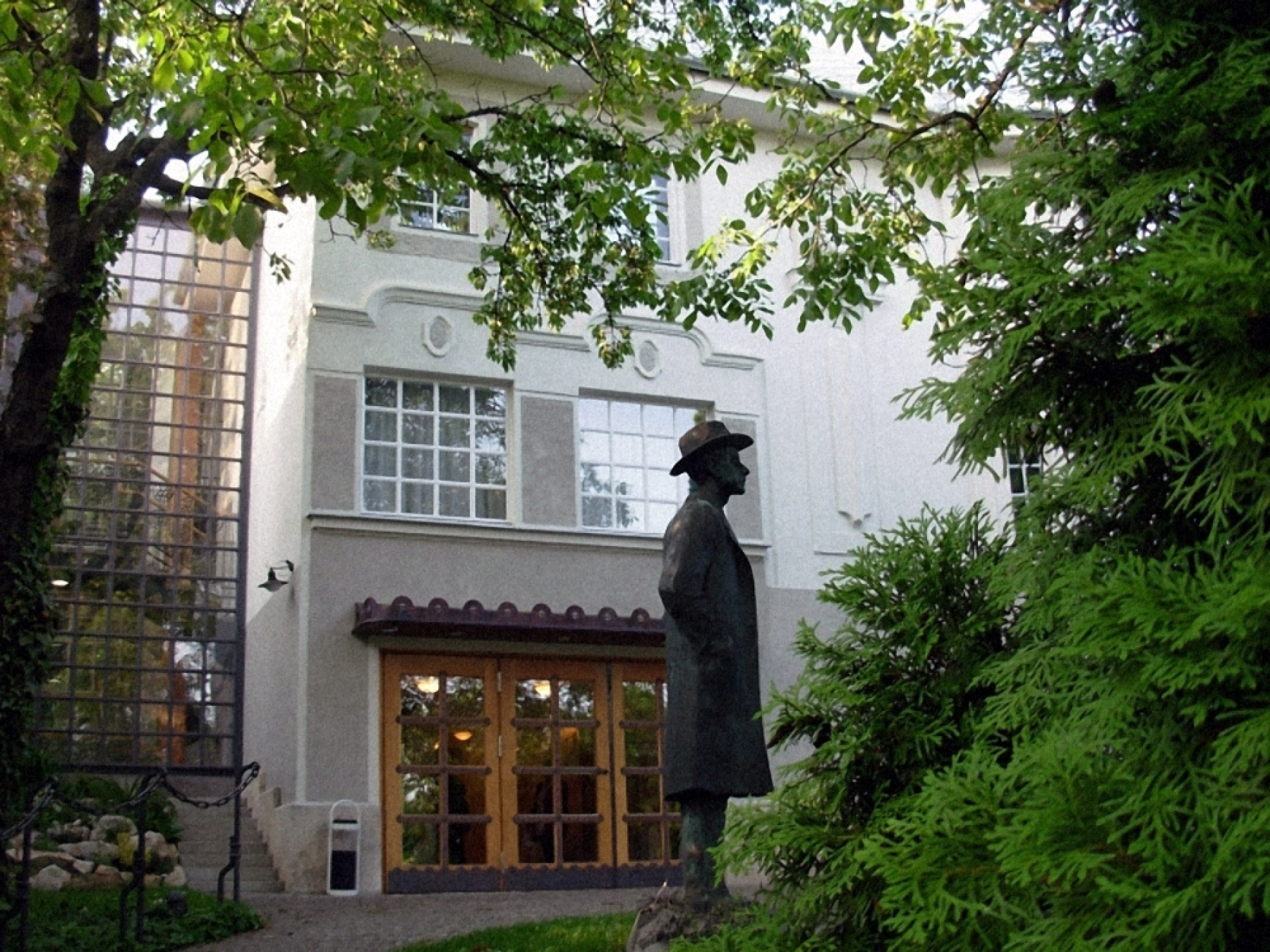 Bartók's last Hungarian residence at Csalán Street 29. (Photo: bartokemlekhaz.hu)
When the couple left for the United States in October 1940, they hoped to return to this house. Although their son, Péter, continued to rent the house for another year after they left, Bartók was unable to return to Hungary, and the villa on Csalán Road was his last place of residence in the country.
After several chequered decades, the villa is now a memorial house, presenting exhibitions and concerts that aim to show Bartók’s true face, give a sense of his universal stature as a creator, and help today’s audiences to know, understand and love his music. And who knows, this experience may become a source of inspiration for someone.
* The idyllic tranquillity was occasionally disturbed by the car races held in the hills of Buda from the 1920s on. Encouraged by the international prestige of the Sváb Hill race, the Gugger Hill race was held here between 1926 and 1935, and its course included Csévi Road, Csalán Road and Nagybányai Street, much to the chagrin of Bartók.