

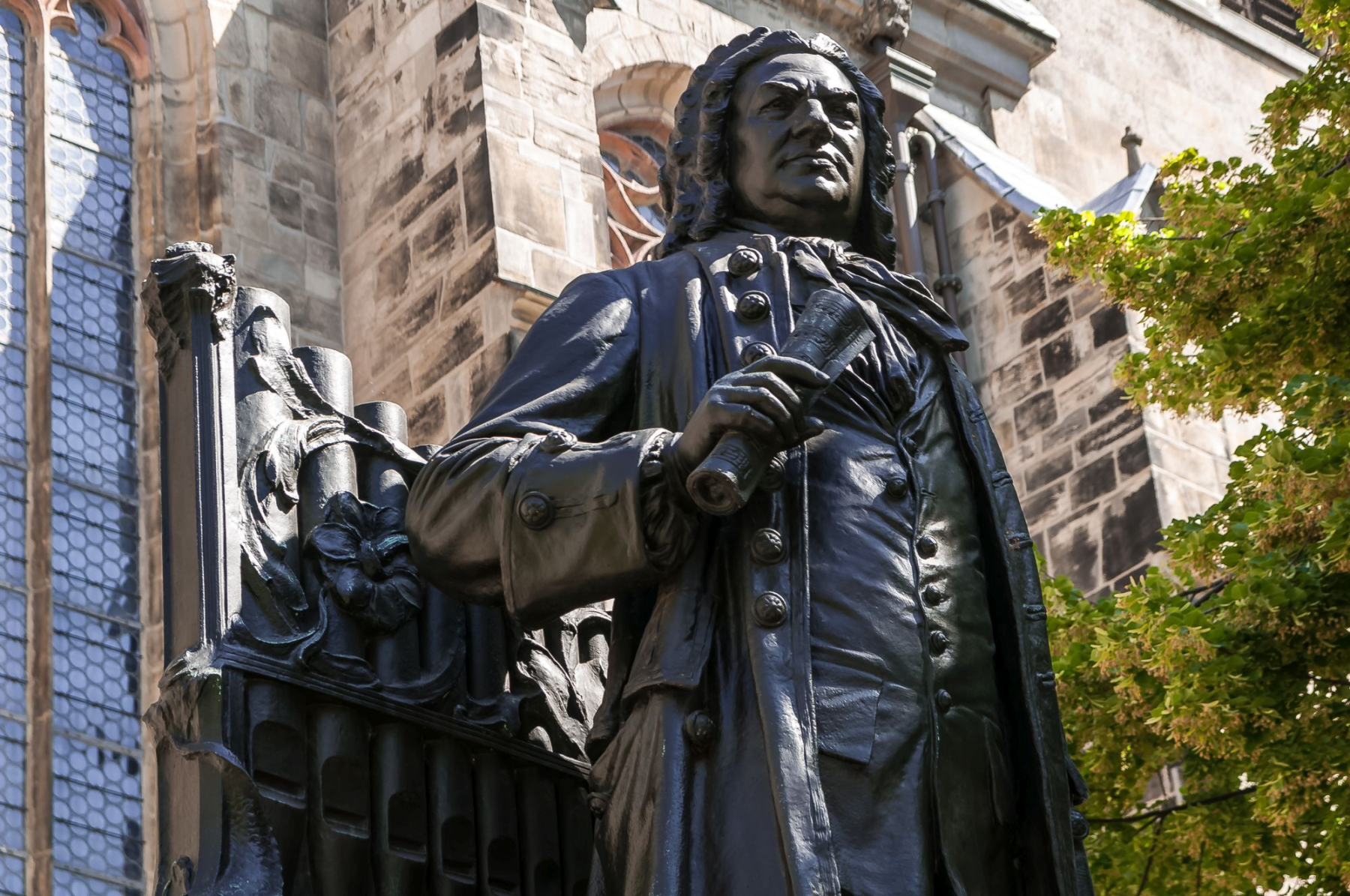
The cult of genius that surrounds composers tends to repaint their lives and recast how they were perceived in their own time. Bach is no exception, and may, in fact, be the most prone to such mystique. Not without reason, of course. Three hundred years on, his counterpoint technique continues to astonish us with its freshness. The Well-Tempered Clavier is more than an instructional manual; it is an extraordinary musical edifice. In their turn, the organ trio sonatas still test those who think they “know the organ.” The cultural influence of this musical giant is so decisive that even the guitar solos of modern rock songs contain imitations, sequences and passages that are unmistakeably inspired by Bach. This is not a style; this is musical DNA.
Johann Sebastian Bach’s music is thus an enduring 300-year-old statement, of which any city that has ever had anything to do with the composer’s work can still be proud. And there is no shortage of them: Köthen, Weimar, Arnstadt and many more, but perhaps none is as closely associated with the composer as Leipzig.
As is well known, Bach was appointed director of music at Leipzig’s Thomaskirche in 1723, and would serve there until his death in 1750. What is not such common knowledge is that he owed his appointment to a fortunate accident.
What happened?
After Johann Kuhnau died on 22 June 1722, the city council unanimously decided on 9 August to offer the vacant position of Thomaskantor to the popular composer, Georg Philipp Telemann. Telemann was director of music in Hamburg at the time, but his career had started in Leipzig, where he studied at the university and caused a sensation with his church music and operas. Much to the disappointment of the townsfolk, he left the city after a few years, but now both the council and the people of Leipzig looked forward to his return. The composer’s decision was long in the making, but after three months, Telemann turned down the opportunity.
The council could not reach a consensus over whether they preferred a Thomaskantor with exceptional musical talent or one who was an exemplary educator, and a number of candidates were rejected. The selection process gained new impetus when two promising candidates were added to the list on 21 December: Christoph Graupner, the conductor of the Darmstadt court, and Johann Sebastian Bach from Köthen were invited to audition.
Preference was again given to the “Leipzig candidate”: on 15 January 1723, the city council voted in favour of Graupner, a one-time student of the Thomasschule, who nonetheless had to pull out of the competition on 22 March because his employer would not release him.
Enter Bach
When the city council convened again on 9 April 1723, eight months after the death of Kuhnau, the dilemma of “musician or teacher” had still not been resolved. This was when Councillor Abraham Christoph Platz made his notorious, now-historic statement: “Since we cannot get the best, we must make do with the mediocre.” By mediocre, he meant Bach.
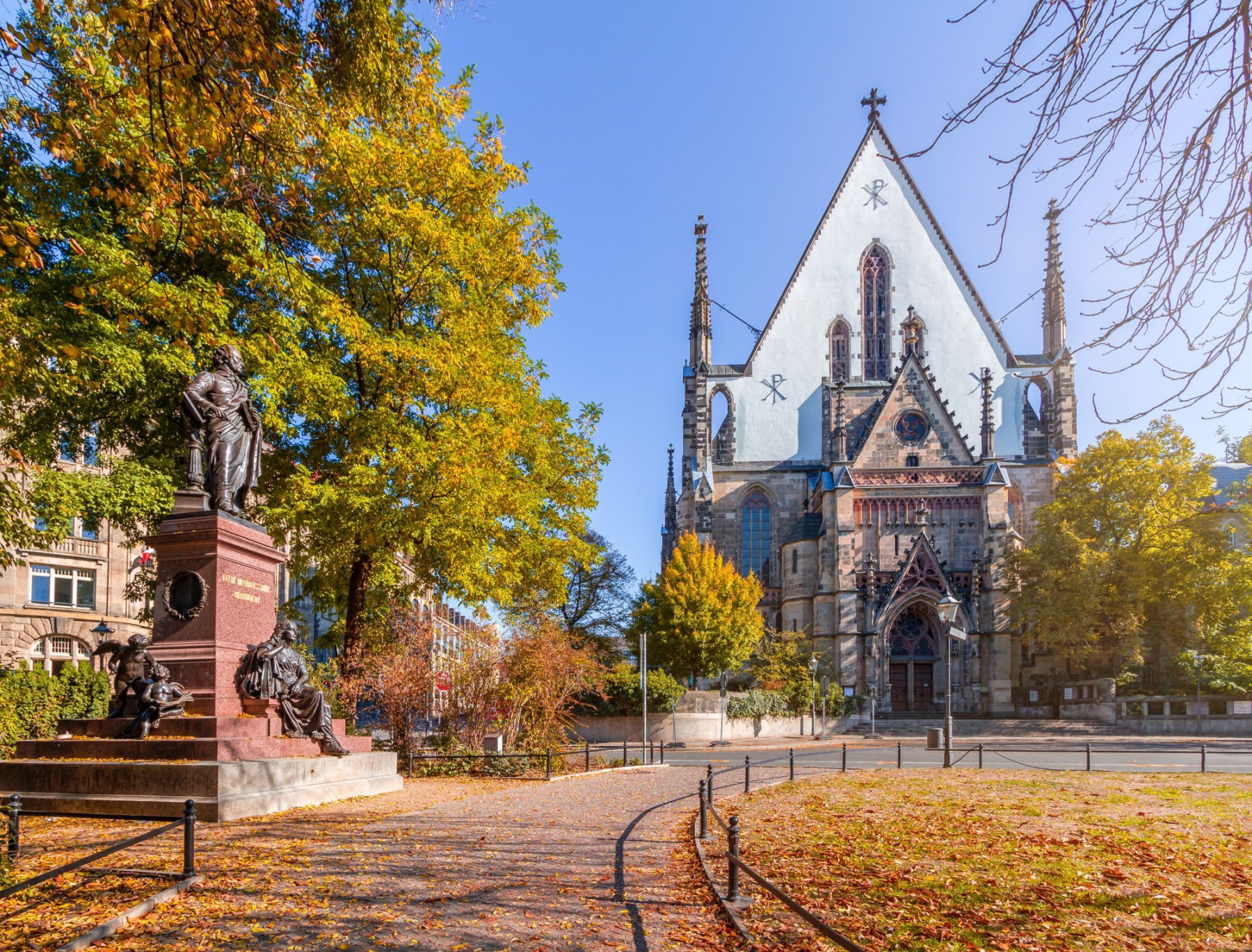 The St Thomas church in Leipzig
Yet his sentence needs some explanation. Since the best composers could not or would not teach, the 65-year-old Platz, who was the chief champion of the pro-educator camp, tried to introduce a new candidate who, to his mind, was a competent teacher, though (in his view) only a “mediocre” composer and musician.
The council made its decision at this meeting, and an offer was made to Bach, who signed the preliminary contract on 19 April and was unanimously elected Thomaskantor on 22 April. After he passed his theology exam, the Consistory of the Electorate of Saxony confirmed his appointment on 13 May, and from then on, nothing could stop the musical giant in Leipzig.
And the giant roared
It was at the following Christmas that Bach had his first chance to prove himself, and he presented his Magnificat. It was his first major liturgical work in Latin and was a clear success with the Leipzig congregation. (It is important to note here that these were ecclesiastical works with a role in liturgy, and were not meant to provide a concert experience.) But the best was yet to come: the Magnificat had raised the bar very high, while time was short, so Bach put all his energy into his Easter piece, and composed the monumental St John Passion with utter concentration and dedication.
The St John Passion
Compared to the later St Matthew Passion, this work is concise, to the point and dramatic from beginning to end. While the emotional framework of the St Matthew Passion is composed of the suffering, doubts and crucifixion of Jesus, creating a meditative, almost liturgical experience, the St John Passion presents the grandiose King of Kings, the glorified Christ, whose suffering foreshadows redemption, and this gives the work the air of an opera, with many more emotional climaxes, outbursts and exclamations.
Of course, both images have a meaning and a place in the realm of church music because at their heart, they both mean the same. Since a Passion is an oratorio about the martyrdom of Christ, neither is without a stirring, thought-provoking effect; but while in the St Matthew Passion this experience is profound and personal, in the St John Passion it resembles an involuntary cry from deep within. The St Matthew Passion is a cathedral; the St John Passion is thunder. Both remind mortals of the presence of God, but in a very different form.
The St John Passion is not a cautious work. Instead of caressing and instructing the listener, it overwhelms them. It overwhelmed the congregation of Leipzig’s Nikolaikirche, and their reaction to the tense and unsettling experience was fairly mixed. This, among other things, motivated Bach to revise the work on no fewer than three occasions, the last a year before his death. Almost three hundred years have passed since then, and we have come to receive Bach’s works with far greater understanding because we can see and hear how his compositions, and especially the St John Passion, are imbued with his inimitable theological and musical atmosphere. His works continue to be performed over and over again, and if you listen carefully, after all this time you can still hear the giant roar.