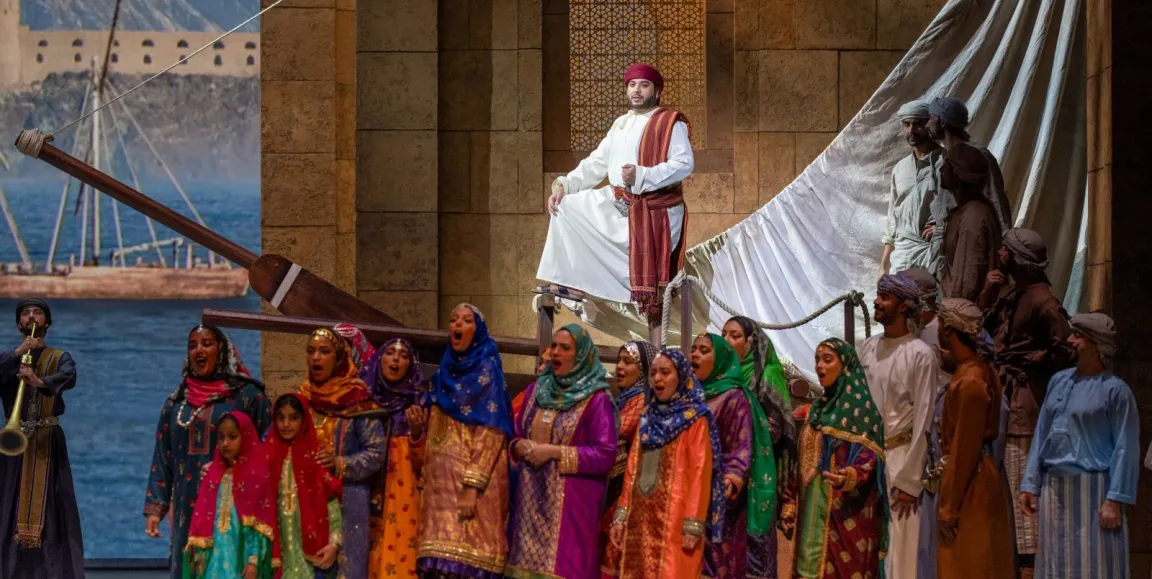


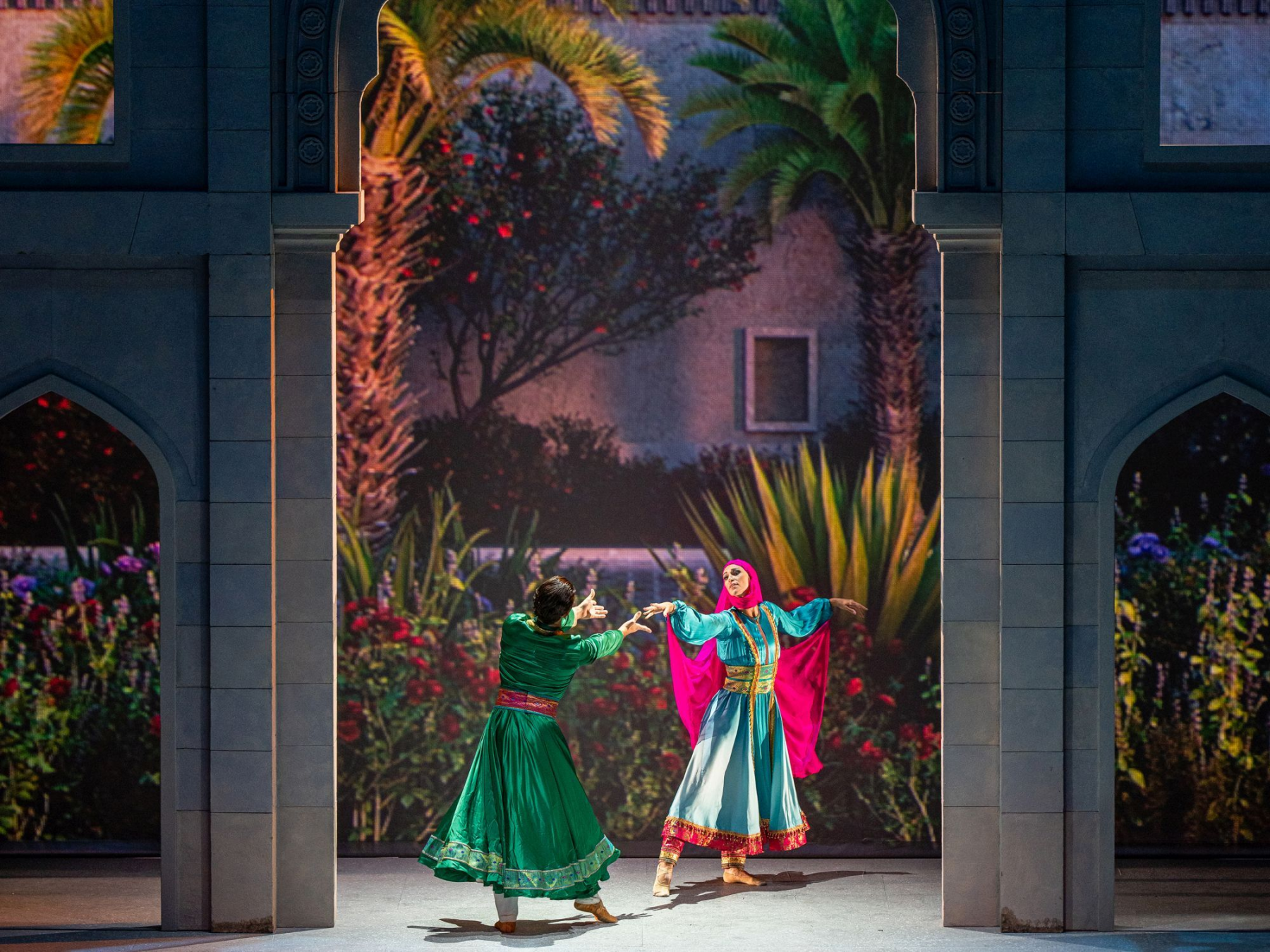
Countless iconic scenes in operas are associated with exotic locales, since almost from the dawn of the genre librettists realized that audiences had a particular fondness for stories set in distant lands. However, these settings used to be much more projections of the European imagination than authentic portrayals of reality in parts of the world unfamiliar to creators and audiences. How is it, then, that exotic operas of the 21st century have become such an important bridge between East and West? It may be because, despite their unique cultural garb, they address universal human problems, as does Sindbad, the Omani Sailor, a joint production of Oman’s Royal Opera House Muscat and Müpa Budapest.
Contemporary Responses to the Exotic
The story of Sindbad, the Omani Sailor comes to life through the music of Hisham Gabr and the libretto of Nader Salah El Din. Csaba Káel, the director of the production whose cast features Arabic vocal virtuosos and outstanding Hungarian performers, knows this world intimately as this is the second time he has worked with the renowned creative duo. He has also been involved in the staging of numerous successful operas set in exotic locales.
Hisham Gabr is internationally recognized as a composer and conductor; a particularly versatile Egyptian artist, he has deep connections to the legendary hero of One Thousand and One Nights. Through the heroic struggles of the emblematic figure of Sindbad, audiences gain an insight into the living cultural traditions of the Arab world. Oman, meanwhile, is not merely a backdrop against which all the secrets of the fabled East come to life; it is also a space of identity and memory, where the journey signifies both a maritime adventure and a quest for truth. As he overcomes the storms around him and becomes a hero, Sindbad also finds himself.
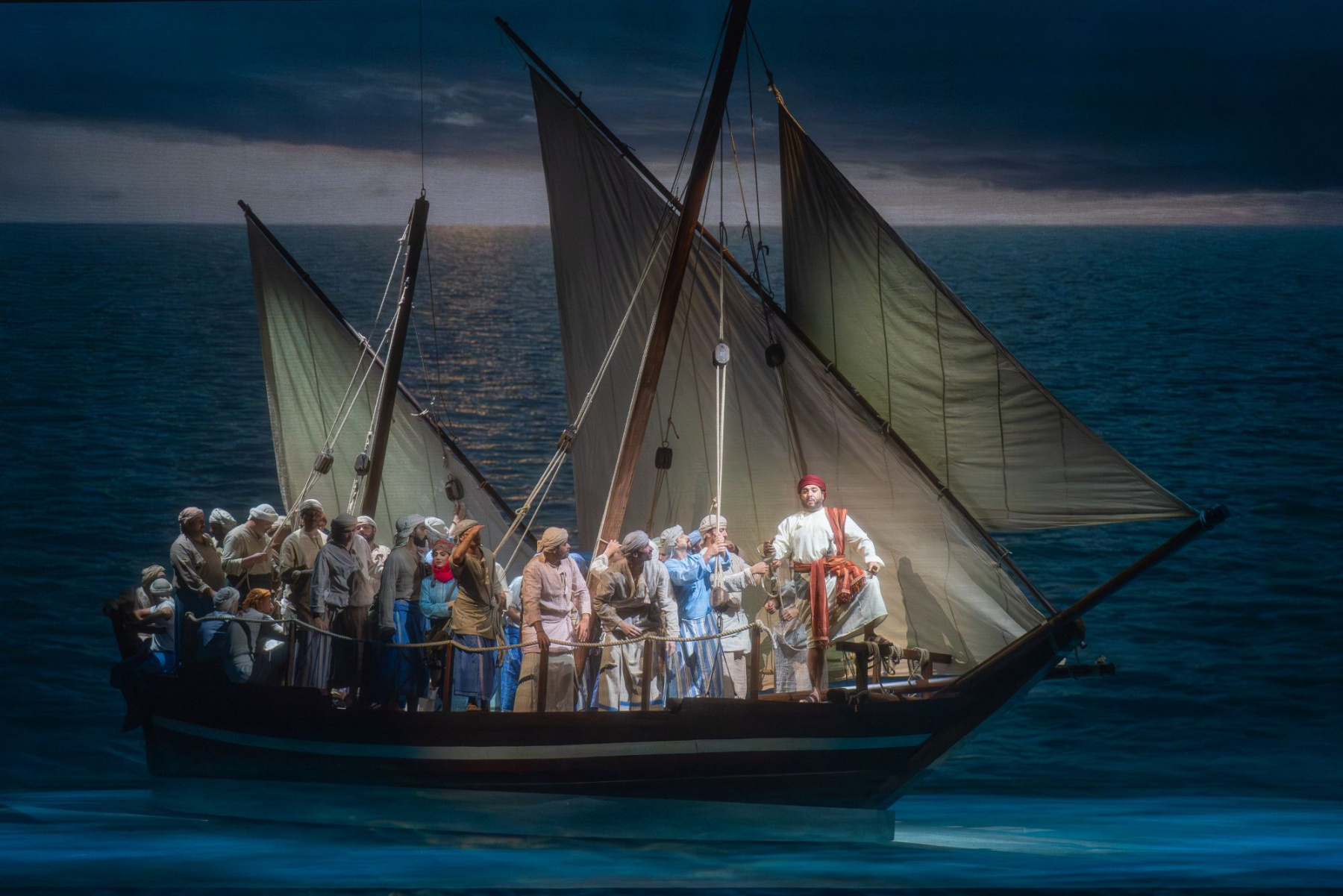 Sindbad, the Omani Sailor guides the audience to magical lands @ Khalid Al-Busaidi, ROHM
The Earliest Milestones
The 'exotic' appeared in opera not long after the inception of the genre, though it came to mean something different in each era. The first experiments of this kind date back to the late 17th century, when European audiences began to take an interest in distant cultures. An early example of this is the joint work of Jean-Baptiste Lully and Molière, Le Bourgeois gentilhomme (1670), whose famous 'Turkish ceremony' still evoked the East in a parodic manner, while at the end of Henry Purcell’s opera The Fairy-Queen (1692), Chinese dancers appeared. (Incidentally, a semi-staged version of the latter, also directed by Csaba Káel, was performed in Müpa Budapest in 2009.)
Jean-Philippe Rameau’s 1735 opera Les Indes galantes was the first large-scale work to conjure up multiple distant locations, though at this stage it was still tailored to European tastes. It was during this period that imitations of 'Janissary music' also became popular: a characteristic example of this is Mozart’s opera Il Seraglio (1782), which presents Eastern culture in a more nuanced manner.
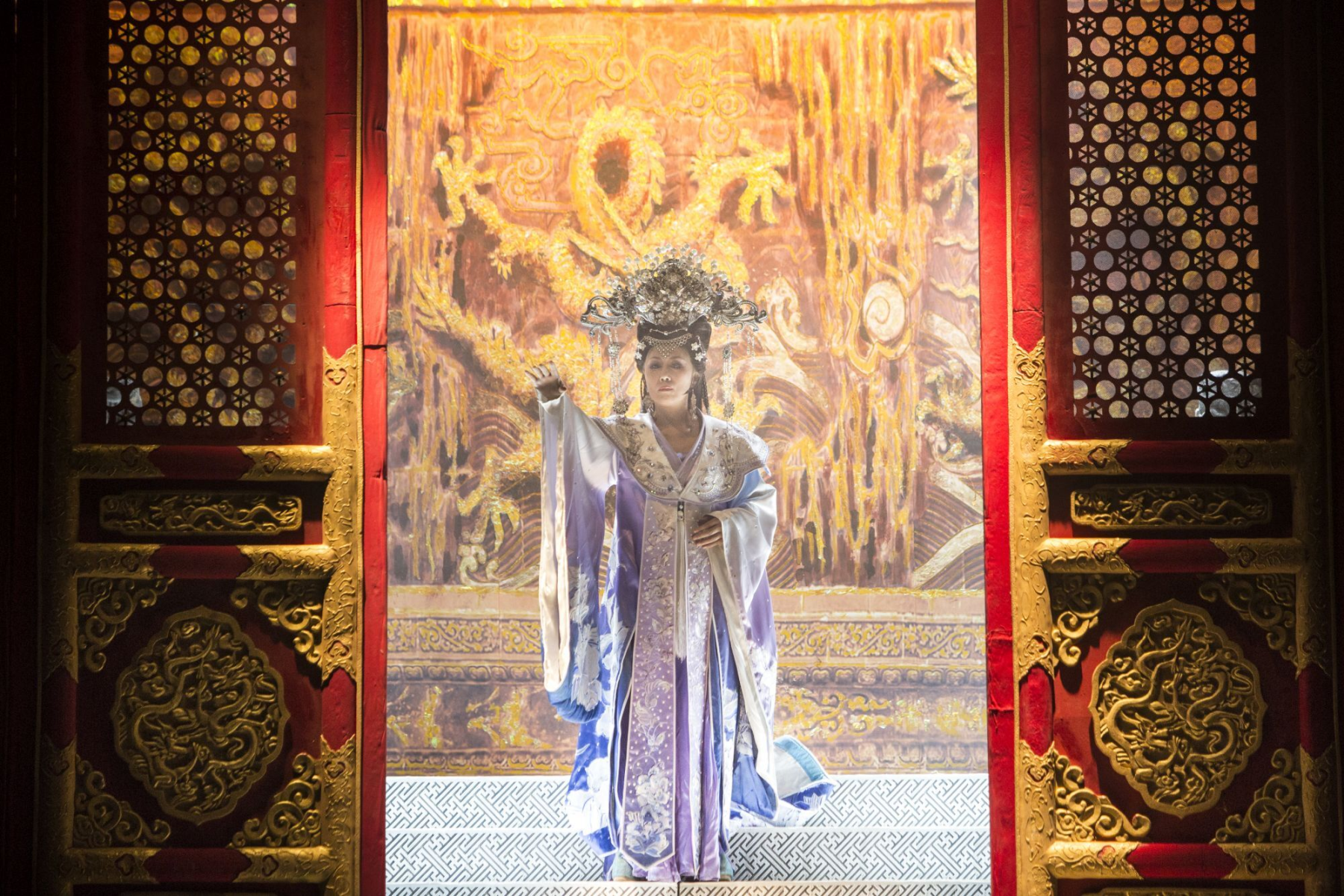 On the 2016 Budapest Spring Festival Puccini's TUrandot awas performed by the Chines National Opera © Pályi Zsófia
The 19th Century: The Golden Age of the Exotic
In The Pearl Fishers (1863), Georges Bizet transported audiences to Ceylon, while his Carmen (1875) took them to Spain, where the exotic served primarily as a sensuous backdrop. Giuseppe Verdi, who is said to have drawn some inspiration from a collection of Arabic folk songs for his still popular Aida (1871), gave the story a timeless relevance through the fragility of its protagonists and the profound moral questions raised by war. Giacomo Puccini, a master of melody, became a veritable expert on the East, as the tragic story of Madama Butterfly takes place in Japan, while Turandot is set in China. He did not live to complete the latter, but others did, and the opera, which told the story of a mysterious woman and introduced the audience to the socio-philosophical issues of the era, is still performed, in two versions: the earlier by Franco Alfano, the latter by Luciano Berio.
The 21st Century: Integration and Authenticity
While early works often used distant cultures as mere scenery, 21st-century operas now strive toward real cultural integration and authenticity. Opera has thus become a platform where the values of different civilizations can meet with confidence, and contemporary works increasingly invite dialogue with creators and audiences. So let us board the ship of Sindbad, the Omani Sailor, together!