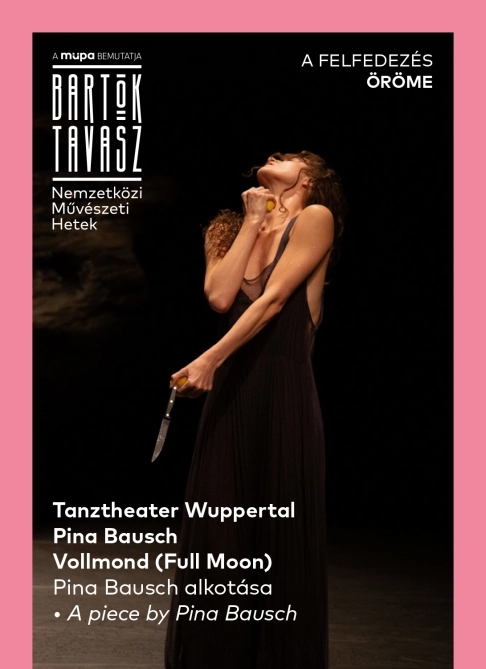


Tanztheater Wuppertal Pina Bausch: Vollmond (Full Moon)
10 April 2026 | 7.00 pm
Müpa Budapest — Festival Theatre
#Dance
Ticket prices
8900
-
14900
Ft
Performed by:
Edd Arnold, Dean Biosca, Emily Castelli, Maria Giovanna Delle Donne, Taylor Drury, Alexander López Guerra, Ditta Miranda Jasjfi, Pier Paolo Lara, Reginald Lefebvre, Julie Anne Stanzak, Christopher Tandy, Tsai-Chin Yu
Set designer:
Peter Pabst
Assistants to the set designer:
Alexandre Corazzola
Costumes:
Marion Cito
Assistant costumes:
Jo van Norden
Rehearsal directors:
Daphnis Kokkinos, Azusa Seyama-Prioville, Robert Sturm
Musical collaboration:
Matthias Burkert, Andreas Eisenschneider
Collaboration:
Robert Sturm, Daphnis Kokkinos, Marion Cito
Choreographer, director:
Pina Bausch
Pina Bausch was one of the most influential dancers and choreographers of the 20th century, the creator of epoch-making productions of dance theatre, and it is perhaps no exaggeration to say that her magnus opus was the Tanztheater Wuppertal itself, which from the early 1970s on she transformed into an extremely important centre of modern dance. Although she passed away more than fifteen years ago, her personality is a living reality that continues to shape the world of dance. ‘By the end of her performances, we are the closest friends of her dancers,’ wrote Péter Nádas in 1995, before her company’s first Budapest appearance.
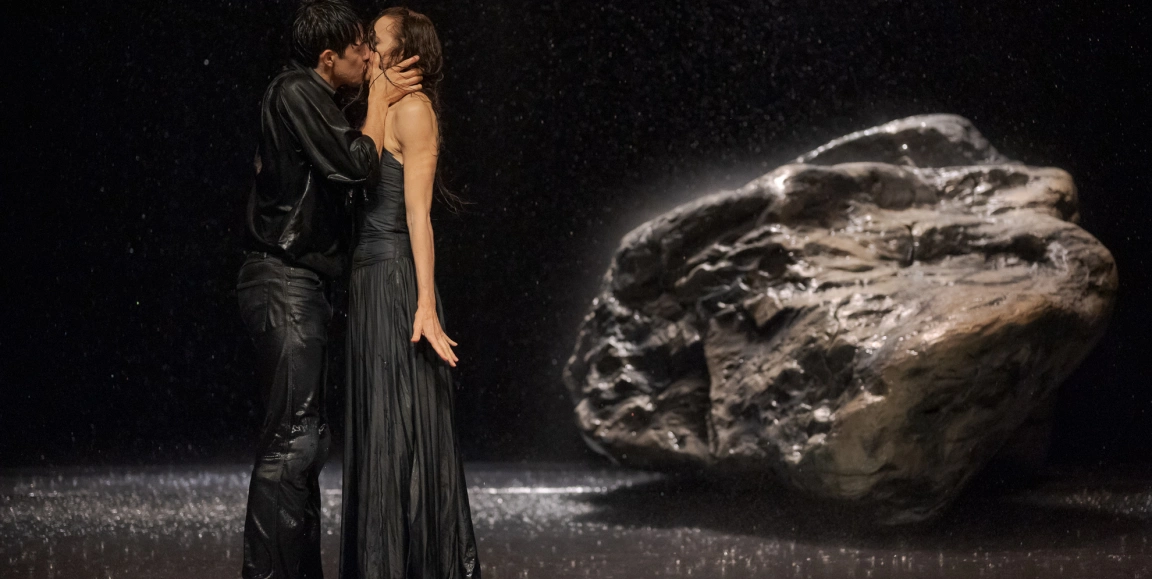
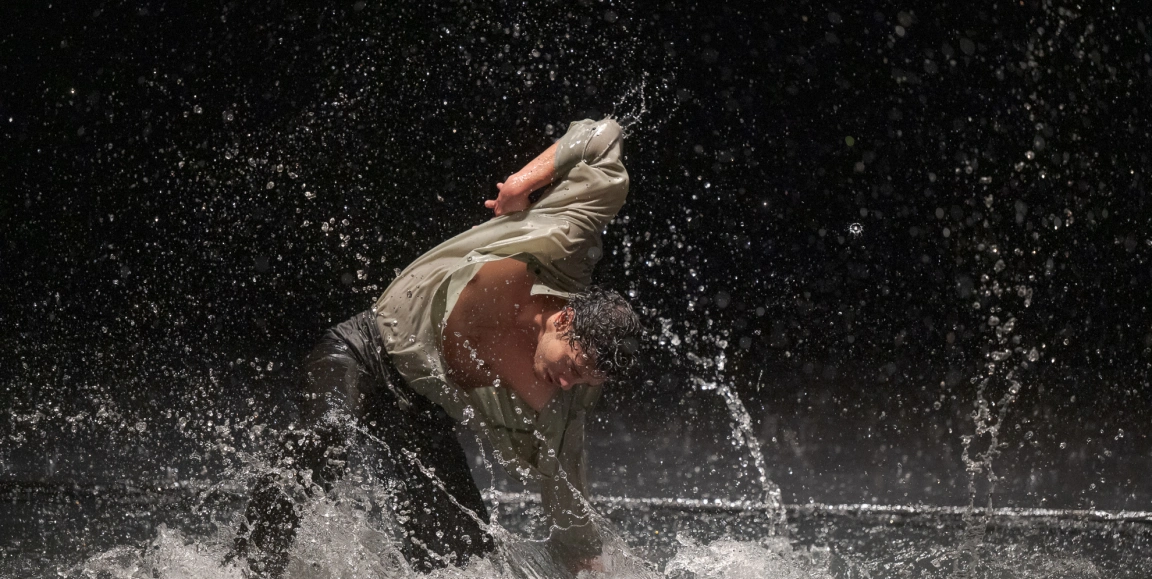
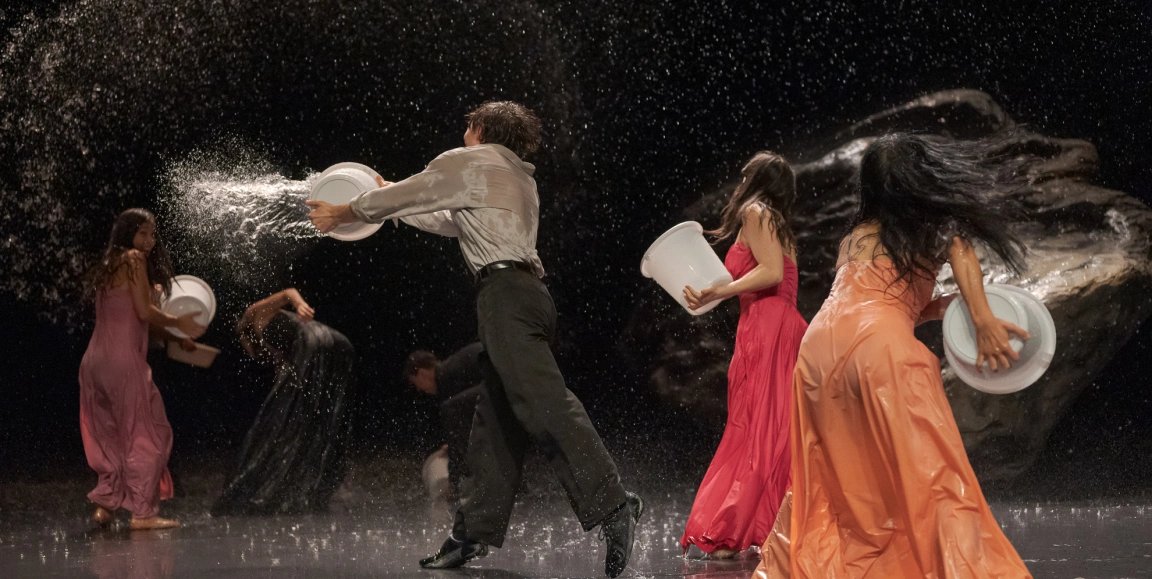
One of her last works was the 2006 Vollmond (Full Moon), which is an essential piece of her dance theatre, thanks to a structure that juxtaposes short episodes, a direct and moving emotionality, and a precision that allows it to see the universe in the tiniest tremors of human connection. ‘It’s another work in which all she speaks about is man – feeling and sensitive man, nothing more or less.’ (Katalin Lőrinc)
One of her last works was the 2006 Vollmond (Full Moon), which is an essential piece of her dance theatre, thanks to a structure that juxtaposes short episodes, a direct and moving emotionality, and a precision that allows it to see the universe in the tiniest tremors of human connection. ‘It’s another work in which all she speaks about is man – feeling and sensitive man, nothing more or less.’ (Katalin Lőrinc)
#Dance
Ticket prices
8900
-
14900
Ft