

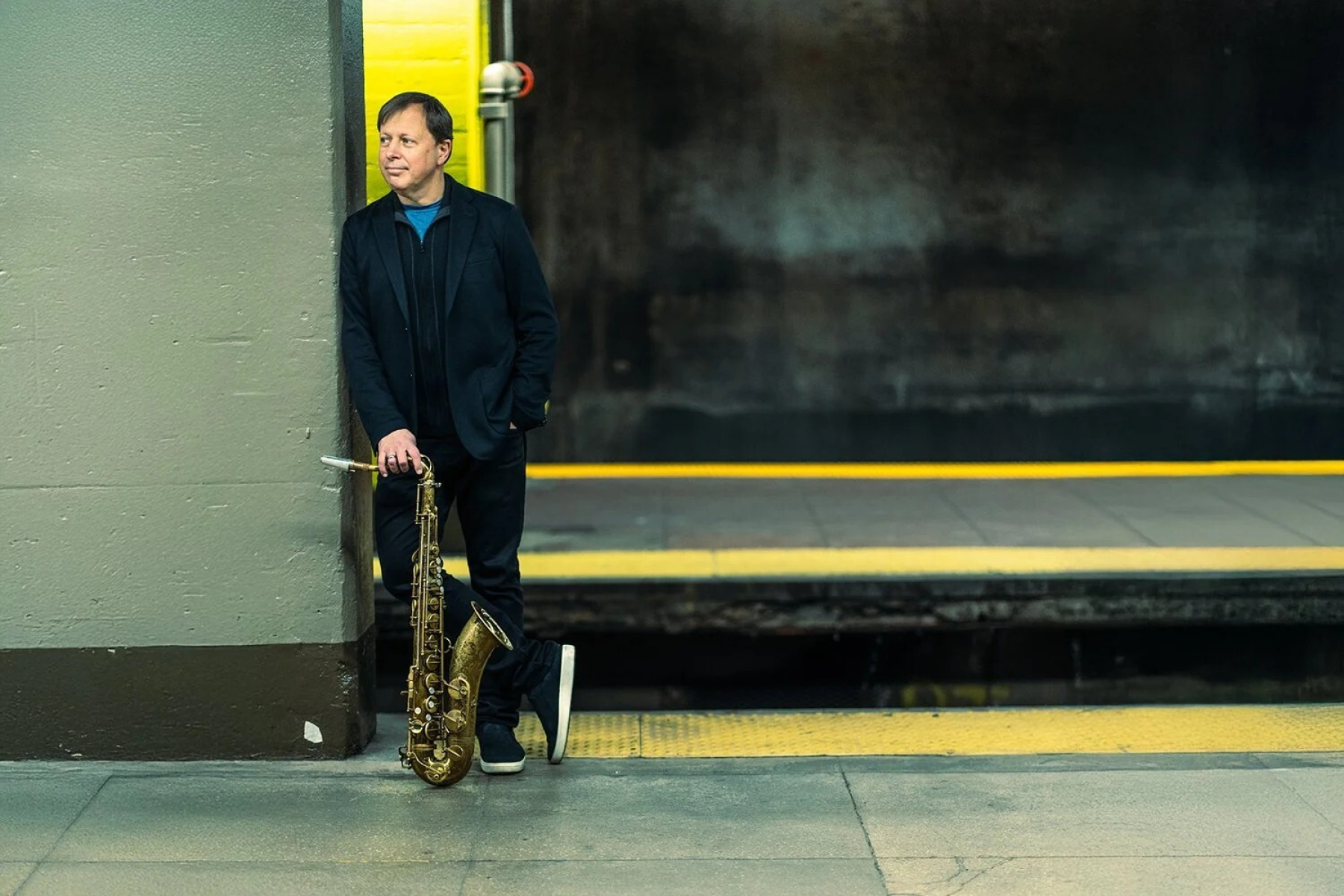
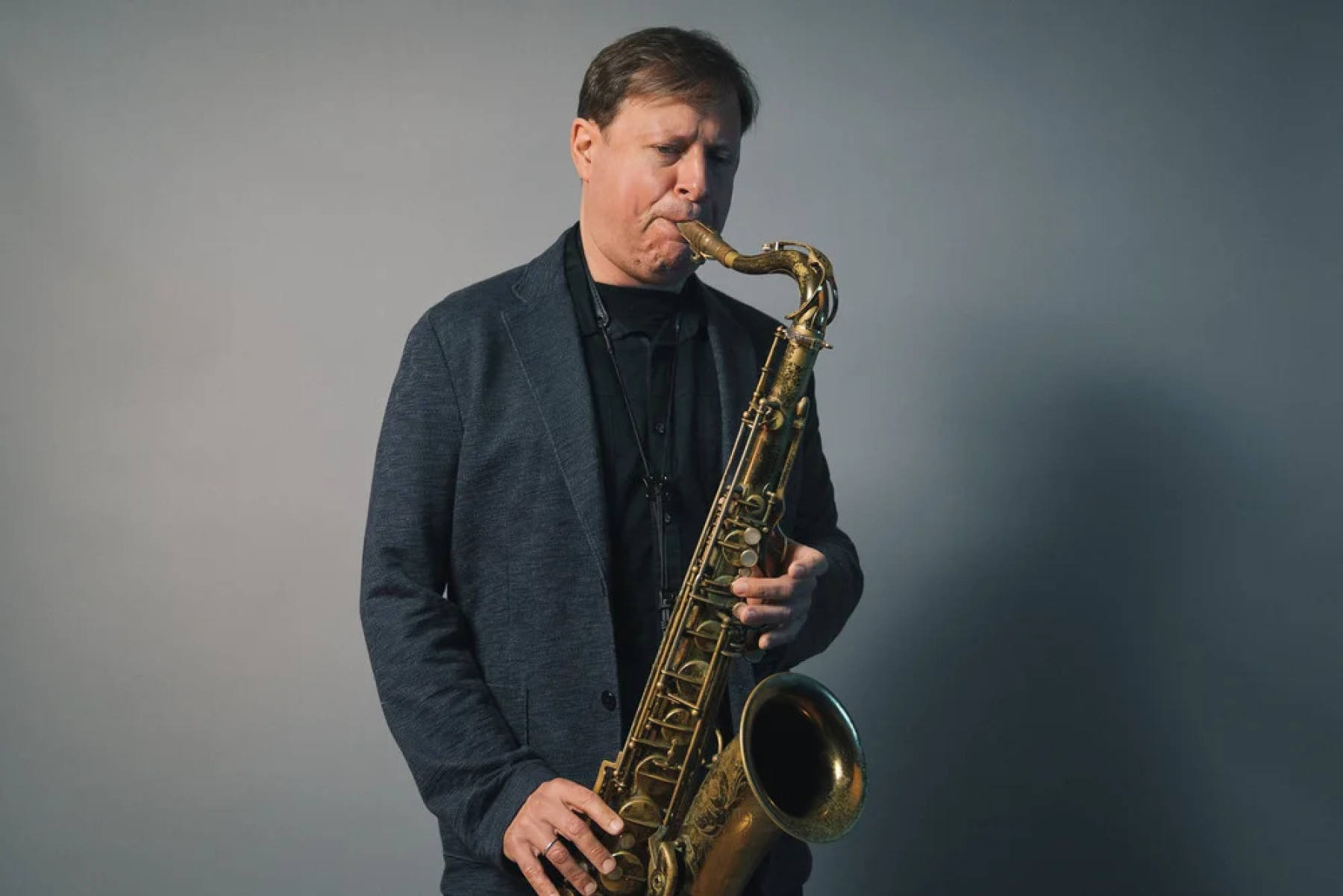
Chris Potter’s is the textbook example of the perfect 20th-century jazz career. After a few youthful missteps, the 1990s already saw him play with the greatest, and since then, his unstoppable creative drive has made him a towering saxophonist of his generation, who has over a hundred albums and a string of five-star collaborations to his name.
Jazz does not have a very long history.
Which is not to say it isn’t a very broad church, with countless factions, barely reconcilable convictions and radically distinct sounds. Yet, if you look at the major players in the genre today, you can go back to the roots of jazz in as few as three steps.
Take the example of Chris Potter. The saxophonist, who would probably rather not be reminded of the term ‘child prodigy,’ met iconic bebop trumpeter Red Rodney while still attending college, and soon thereafter joined his band.
Being in a band with Red Rodney in the 1990s meant not only playing before Dizzy Gillespie and James Moody on some nights, but also being in the thick of a very important phase of jazz history. Back in the early 1950s, Rodney had played with Charlie Parker, who stood up for him when it was demanded that the white guy be removed from the band. ‘He’s my man,’ Parker said. ‘Ain’t you ever heard of an albino?’ Red-haired Rodney went on to be called ‘Red Albino,’ while Charlie Parker…
Charlie Parker needs no introduction.
Chris Potter is thus not simply a leading figure in contemporary jazz, but someone whose artistic lineage runs back directly to the founding fathers of the genre.
Child Prodigy, But Not Like That
Potter is the ultimate anti-star. In his interviews, he speaks as a reserved, jovial 50-something family man, who, under the cloak of a casual style, still offers pinpoint answers. There’s no sign of the jazz star who has practically devoured the genre since the 1990s, picking up the most glittering accolades. DownBeat Magazine called him ‘one of the most studied (and copied) saxophonists on the planet’; Jazz Times referred to him as a figure of international renown; and Dave Liebman called him simply, ‘one of the best musicians around.’
Reading such praise, one would expect Potter’s career to have started with a saxophone-shaped vision and a straight road ahead—but the reality is much duller.
At age 10, he was still not sure whether his instrument would be the guitar, the piano or the saxophone. Once he had made the commitment, the first successes were coming fast. When he was 12, the International Association for Jazz Education named him the most promising saxophone player, and of the years that followed he said he didn’t ’remember ever deciding to be a musician. There was never a moment where I was like, this is what I’m going to do with my life. But by the time I graduated high school, what else was I going to do? It was the obvious path.’ Later, when he received a scholarship to the School of Jazz and Contemporary Music at The New School, a private university whose faculty once included John Cage, the world opened up for Potter—though not quite in the manner we’d expect. ‘A lot of what I remember about music school is… spending as little time and energy on it as possible so that I could hang out in New York,’ he said in an interview.
In the Company of the Greatest, Until You Become One of Them
Potter successfully compensated for his diligence at school with professional successes. Playing alongside Red Rodney at just 20, the walls came down almost immediately: instead of dreary networking and negotiating with record labels, he was able to showcase his talent to the genre’s most senior figures (Herbie Hancock, Jim Hall, Paul Motian) while also constantly deepening his connections with the mid- and emerging generations. Playing with Pat Metheny, he could further hone his more lyrical playing and aspirations for monumental forms, and he was also a long-time member of Dave Holland’s quintet. He and Brian Blade, a leading contemporary jazz drummer, have collaborated countless times since the 1990s; in 2025, they teamed up with John Patitucci for a record. The three are often joined by Brad Mehldau, and the quartet released its most recent album in 2024.
 Potter last visited Müpa as a guest of Söndörgő in 2022 © Kotschy Gábor, Müpa
It should have become obvious by now that Potter is not the type to sit at home, and he, in fact, is closely connected to the Hungarian jazz scene. In 2008, he played at Béla Szakcsi Lakatos’s 65th birthday concert at Müpa Budapest, and in 2017, the same year the pianist was Artist of the Season, he returned as a member of the Szakcsi New Currents formation. Potter appeared in concert with the Dresch Quartet in 2012, was a guest of the Németh Ferenc Quartet in 2013, and in 2022 he joined Söndörgő for a performance.
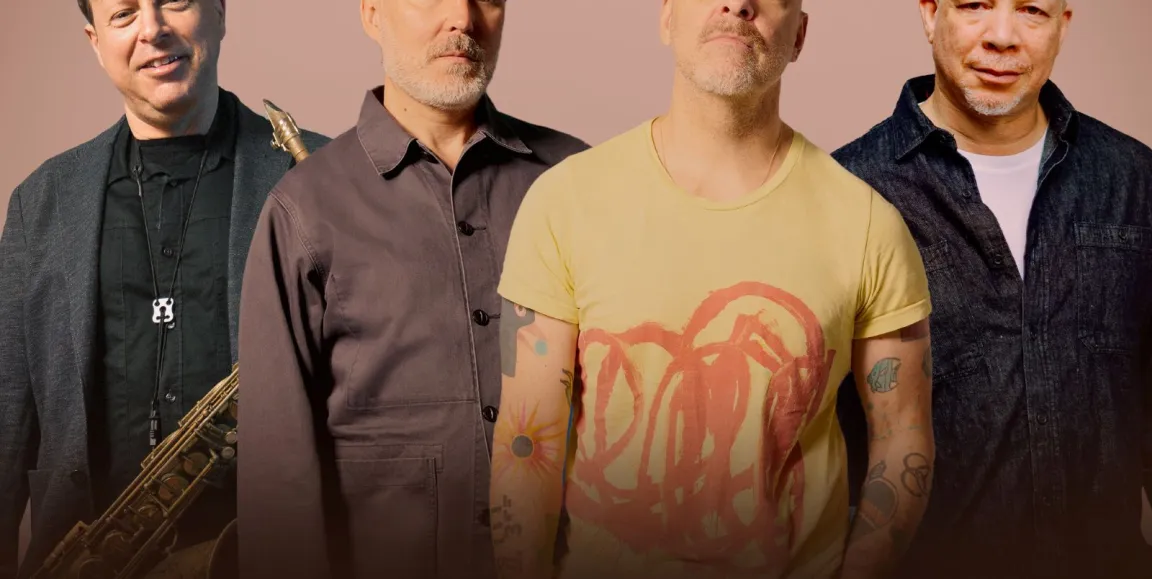
His return to Müpa Budapest for the Bartók Spring is both a celebration and a farewell—fortunately not to Potter himself. Formed in 2000 and led by Reid Anderson (bass) and Dave King (drums), The Bad Plus announced in January this year that they would be going on a farewell tour. In their last concert in Hungary, they will be joined by Chris Potter and Craig Taborn (piano) to celebrate Keith Jarrett’s legendary American Quartet.